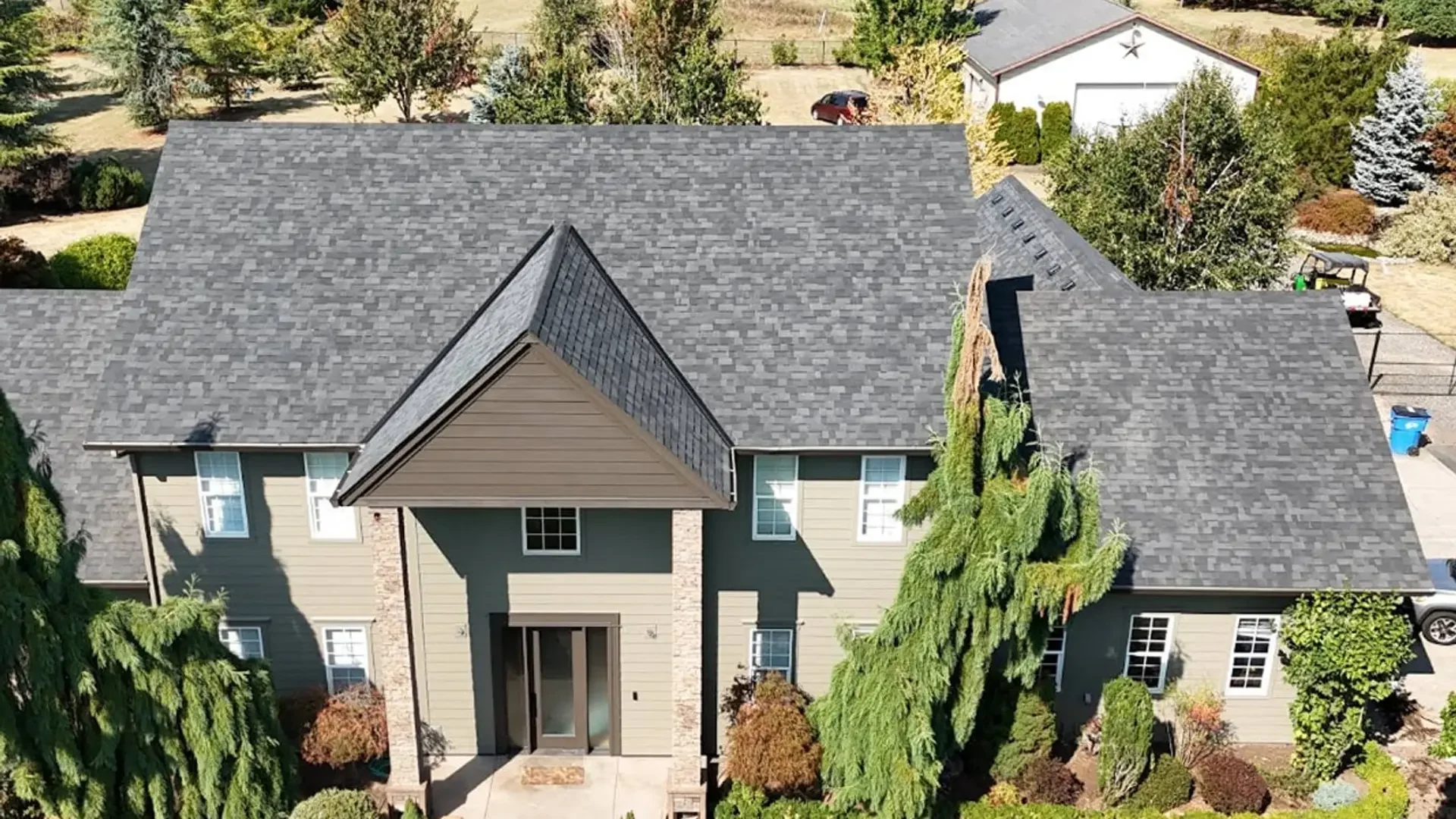
A stain on the ceiling or a damp patch in the attic does not automatically mean the roof is leaking. In many homes around Vancouver and Portland, the actual cause turns out to be attic condensation rather than a failure in the roof covering itself. Roof leaks tend to follow rainfall and leave a concentrated water trail near flashing or roof penetrations. Attic condensation tends to show up as widespread dampness or wet fasteners during cold weather, sometimes with no rain involved at all. These patterns are useful clues, not final proof, which is why both the roof and the attic deserve a look before deciding on a repair.
What a Roof Leak Usually Looks Like

A true roof leak is typically tied to rain. Water tends to trace a path from a specific entry point, often around flashing, vent pipes, chimneys, skylights, or other roof penetrations, down to the spot where it becomes visible inside. If a stain only appears after a storm and seems to originate from one general area, that pattern points toward the roof covering or its flashing as the likely source.
What Attic Condensation Usually Looks Like
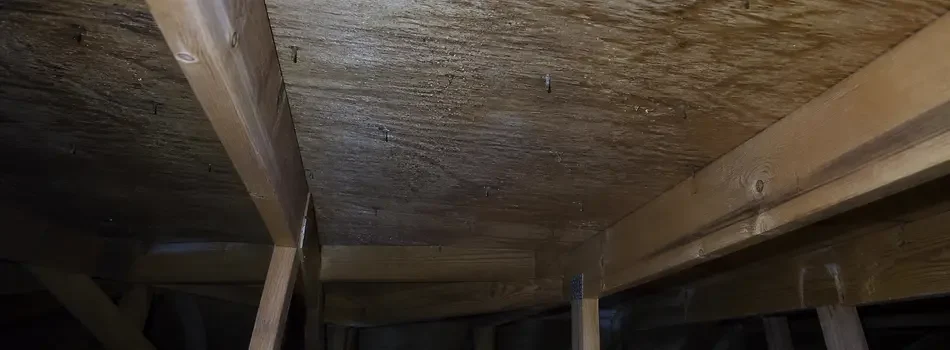
Condensation forms when moisture-laden air inside the attic contacts a surface that has cooled below its dew point. That moisture can originate from air leaking up from the living space below or from attic ductwork, not from any failure in the roof itself. Because of this, condensation often produces damp insulation, wet nail or fastener tips, or general dampness spread across a wider area, and it can appear during cold weather even when it has not rained. The Pacific Northwest National Laboratory's Building America Solution Center notes that controlling this kind of moisture starts with identifying where warm, humid air is reaching cold attic surfaces. One common source worth checking is bathroom or kitchen exhaust fans, which need to discharge outdoors rather than vent into the attic space itself.
Why Vancouver and Portland Winters Make This Harder to Judge
Local weather adds a layer of complexity. The National Weather Service describes Portland winters as relatively mild, cloudy, and rainy, with rainfall concentrated from October through May. That overlap matters because the same cold, wet months that bring rain also bring the cold roof-deck temperatures that encourage condensation. Timing alone cannot separate the two causes. A dry-weather observation can still add useful evidence, though. Checking the attic during or shortly after a cold snap, when frost may be visible on framing or sheathing, can help confirm whether condensation is part of the picture even without active rainfall.
Checking Safely Before You Call for Help
A reliable diagnosis usually connects what is visible from the exterior, the interior ceiling, and the attic itself, including the condition of roof penetrations, nearby plumbing, exhaust outlets, and ventilation openings. A single ceiling stain rarely tells the whole story on its own. If you take a careful look yourself, stay in safely accessible areas. Attics carry fall-through risk between ceiling joists, and any sign of structural decay is a reason to stop and call for an assessment rather than continuing to investigate on your own.
Don't Assume More Ventilation Is the Fix

It is tempting to treat a damp attic as a ventilation problem and add a powered attic fan. In a ventilated attic, moisture control actually depends on addressing indoor air leakage and making sure intake and exhaust airflow are balanced, and an added fan can be ineffective or even make moisture problems worse. The more reliable path is identifying where moist air is entering the attic in the first place.
Getting a Clear Answer
Because roof leaks and attic condensation can produce overlapping symptoms, an on-site assessment is usually the fastest way to know which one you are dealing with. Redbird Roofing offers roof inspection and roof repair services, including leak repair and flashing repair, throughout the Vancouver Metro and Portland Metro area. The roof repair process includes a free attic inspection along with the repair estimate, resulting in a problem report and a personalized solution rather than a generic fix. A project manager is assigned to every project to help make sure the work matches what was actually found. If an active roof leak is confirmed, it is worth addressing before any attic insulation or retrofit work moves forward, since new insulation is not a substitute for stopping water entry at its source.
Ready for an Inspection?
If you are seeing a stain, damp insulation, or wet spots in the attic and are not sure whether it is coming from the roof or from condensation, Redbird Roofing can take a look and sort out the actual cause. Call (360) 605-3127 to schedule an inspection for your home in Vancouver, Portland, or anywhere else in the surrounding Vancouver Metro and Portland Metro service area.