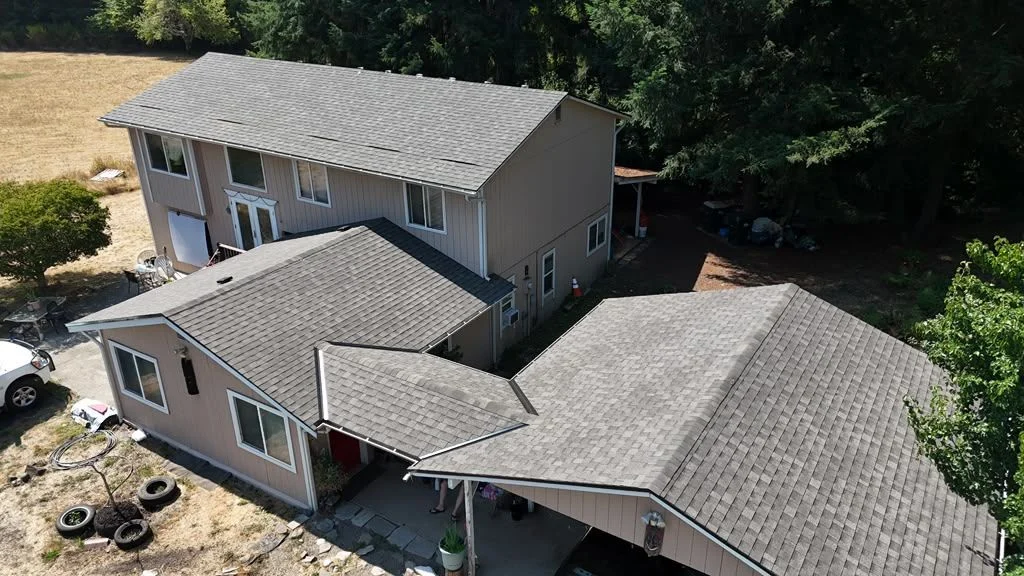
Roof flashing is thin metal sheeting installed at joints, edges, and penetrations where water is most likely to enter your roof. Flashing covers the gaps around chimneys, vents, skylights, and valleys that shingles alone can't seal. RedBird Roofing installs and repairs flashing across the Portland-Vancouver metro, where sustained rainfall makes proper flashing one of the most critical parts of any roofing system.
After inspecting hundreds of roofs in Clark County and the Portland metro, we've found that flashing failures cause more leaks than shingle damage does. A roof can have perfect shingles and still leak badly if the flashing around a chimney or sidewall has pulled away or corroded through. Understanding the types of flashing and what failure looks like helps you catch problems before they reach your ceiling.
How Roof Flashing Prevents Leaks

Shingles overlap so they can shed water down the roof slope, but they can't form a watertight seal where the roof meets a wall, chimney, or vent pipe. Flashing bridges those gaps. It's bent to fit the angle of each joint, then layered under the shingles and sealed against the adjacent surface so water flows over it rather than behind it.
In the Pacific Northwest, flashing handles more water than in drier regions. Portland averages 43 inches of rain per year, and much of that rain is wind-driven. Without properly installed flashing, water pushes sideways into joints that shingles were never designed to cover. That's why roofing codes require flashing at every roof penetration and transition point.
Common Types of Roof Flashing

Different roof joints call for different flashing types, and understanding which is which helps you spot problems before a contractor has to point them out.
Step and Counter Flashing
Step flashing runs along the seam where a roof meets a vertical wall or chimney. Individual L-shaped pieces weave between each course of shingles. Counter flashing, which is the piece embedded in the mortar joint above, covers the top edge of the step flashing. Together, they create a two-layer defense that's essential around chimneys and dormers.
Valley, Vent Pipe, and Drip Edge Flashing
Valley flashing lines the V-shaped channels where two roof planes meet, directing high water volume to the gutters. Vent pipe flashing wraps around plumbing vents with a rubber boot and metal base plate. Drip edge flashing runs along the eaves and rakes to guide water into gutters instead of behind the fascia. Each type handles a specific vulnerability in the roofing system.
Signs Your Flashing Needs Repair or Replacement

Flashing doesn't fail all at once. It deteriorates over years of thermal cycling, moisture exposure, and settling. Catching the signs early prevents water from reaching the decking and framing beneath.
- Rust or corrosion: Galvanized steel flashing eventually corrodes, especially in the Pacific Northwest's constant moisture. Brown streaks on walls below the roofline often trace back to rusted flashing.
- Lifting or separation: Flashing that has pulled away from the chimney mortar or wall leaves an open path for water. Caulk repairs are temporary; the flashing itself needs resetting.
- Water stains around chimneys or vents: Interior stains near a chimney, skylight, or bathroom vent usually indicate flashing failure rather than shingle damage.
- Moss or debris buildup at joints: Organic growth holds moisture against flashing seams and accelerates corrosion. Regular cleaning extends flashing lifespan in wooded areas of Camas, Felida, and Ridgefield.
Resealing one area runs $200 to $300, while full step flashing along a dormer typically costs $400 to $800. Full flashing replacement during a roof replacement is included in the project scope when you work with a licensed contractor like RedBird Roofing.
Frequently Asked Questions
What material is best for roof flashing in the Pacific Northwest?
Aluminum is the most common choice for residential roofs because it resists rust, bends easily, and is designed to last 20 to 30 years in typical PNW conditions. Copper lasts longer but costs significantly more. Galvanized steel works for heavier-duty applications but can corrode faster in sustained moisture. RedBird Roofing selects the flashing material based on the specific application and exposure level.
Should flashing be replaced every time a roof is replaced?
In most cases, yes. Old flashing may look intact on the surface, but corrosion often hides at the bends and overlaps where water collects. Reusing worn flashing under new shingles creates a weak point that can leak within a few years. Replacing flashing during a reroof adds minimal cost and protects the full investment.
Can I repair roof flashing myself?
Minor caulk touch-ups on accessible, single-story sections are manageable for handy homeowners. However, resetting step flashing or counter flashing requires removing shingles and working with precise layering sequences. Incorrect flashing installation is one of the leading causes of roof leaks. Professional roof repair ensures the flashing integrates properly with the rest of the system.
Keep Flashing Problems From Becoming Roofing Failures

Flashing does the work shingles can't. When it fails, even a brand-new roof leaks. Water that gets past compromised flashing finds its way into the decking, framing, and insulation—turning a $300 flashing repair into a $5,000 deck replacement. Annual inspections catch corrosion, lifting, and seal failures while the fix is still small.
Contact RedBird Roofing at (360) 605-3127 or schedule a free estimate to have your flashing inspected and get a clear picture of your roof's condition.