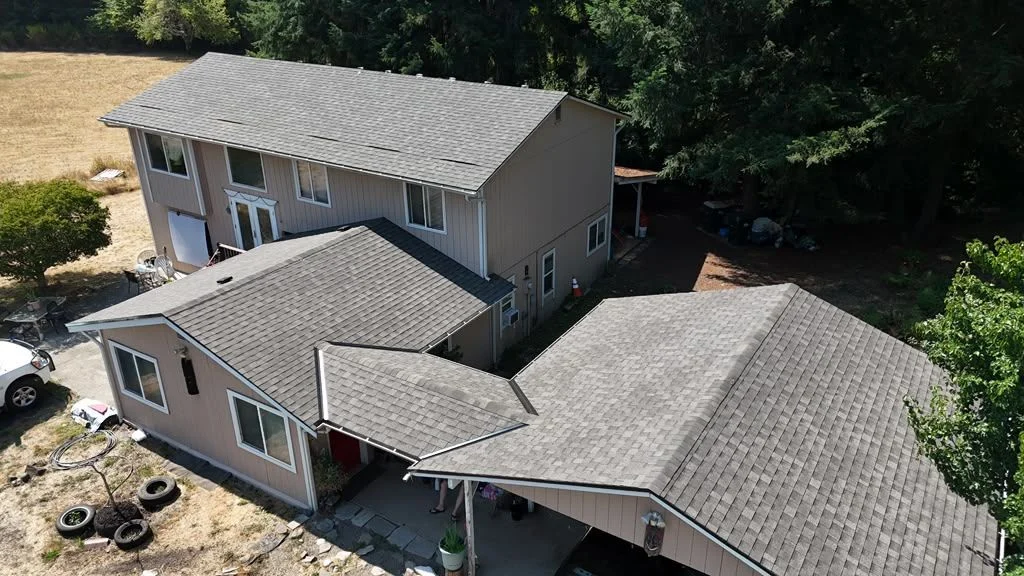
The main types of roof ventilation are soffit vents (intake air pulled in under the eaves), ridge vents (continuous exhaust along the peak), and powered or solar attic fans. A balanced combination of soffit and ridge vents work best for most homes. Installed costs run roughly $300 to $700 per vent type, or $400 to $1,200 for a retrofit on an existing roof. The wrong pairing quickly backfires: running a powered fan alongside a ridge vent pulls air from your living space and into the attic, raising energy bills instead of lowering them.
Having the right system matters because poor airflow manifests as curling shingles, attic mold, ice dams, and a hot second floor. Homeowners usually pin these problems on aging materials, but the real cause is trapped attic air. Restricted ventilation can also void a shingle warranty, since most manufacturers require adequate airflow as a condition of coverage. RedBird Roofing checks the ventilation during every roof inspection in Portland and Vancouver. This guide covers the warning signs of poor airflow, the types of vents that fix it, and what each option costs.
Warning Signs of Poor Roof Ventilation

Several problems that homeowners attribute to aging materials are actually due to inadequate attic airflow. In the Pacific Northwest, where homes across Portland, Oregon, and surrounding Clark County endure rain eight months of the year, these issues are especially common.
- Curling or buckling shingles. Heat trapped in the attic cooks shingles from below, causing them to curl years before they should.
- Mold or dark staining in the attic. Moisture that cannot escape condenses on rafters and decking, creating conditions for mold and wood rot.
- Ice dams along the eaves in winter. Warm attic air melts snow on the roof, which refreezes at the cold eaves and backs water under shingles.
- Excessive heat on the second floor. If the upstairs is noticeably hotter than the first floor in summer, attic temperatures may be reaching 150 to 160 degrees.
- Peeling paint near the roofline. Moisture escaping through soffits or gable ends blisters paint on fascia and trim boards.
Vent Types and What They Cost

The right vent combination depends on your roof design, attic size, and existing airflow. Most homes in the Portland-Vancouver metro perform best with intake vents at the soffits and exhaust vents at the ridge.
Ridge Vents
Ridge vents run the full length of the roof peak and provide continuous exhaust airflow. Installed during a roof replacement, they cost $400 to $700. They work passively with no power source, which makes them the most reliable long-term option. Running a ridge vent alongside a powered fan short-circuits the airflow and can actually reduce ventilation performance.
Soffit Vents
Soffit vents sit under the eaves and serve as the intake side of the ventilation system. Continuous soffit vents cost $300 to $600 installed and move significantly more air than individual round vents. Blocked soffits are the single most common ventilation failure, usually caused by insulation pushed against the openings during attic work. Checking soffit clearance should be part of every roof maintenance checklist.
Powered and Solar Attic Fans
Powered attic fans cost $300 to $500, and solar-powered versions run $400 to $700. They actively extract air from the attic but should only be installed in homes without ridge vents. Running a powered fan alongside a ridge vent pulls conditioned air from the living space into the attic, raising energy costs instead of lowering them.
How Ventilation Affects Your Warranty and Shingle Life

Every major shingle manufacturer requires adequate attic ventilation as a warranty condition. Malarkey, the shingle RedBird Roofing installs as a certified Emerald Pro contractor, specifies minimum ventilation ratios in its warranty terms. If a homeowner doesn’t meet those ratios, a warranty claim for premature shingle failure can be denied regardless of the product’s age.
Proper ventilation extends shingle life by reducing the heat cycling that leads to granule loss and material fatigue. Homes with balanced intake and exhaust ventilation typically have roofs that last closer to their full rated lifespan compared to homes where airflow is restricted. That investment also keeps your living space cooler in summer, reducing air conditioning costs by 10% to 15% in homes where attic temperatures were previously unmanaged.
Frequently Asked Questions
How Often Should Attic Ventilation Be Inspected?
Attic ventilation should be inspected at least once a year, ideally during a routine roof inspection in fall or spring. Annual checks catch blocked soffits, damaged ridge vents, and insulation that may have shifted over time. Homes with heavy tree cover or older construction may benefit from inspections every six months, especially after storm season.
Can You Add Ventilation to an Existing Roof Without Replacing It?
You can add ventilation to an existing roof without a full replacement in most cases. Ridge vents require cutting a slot along the peak, which is straightforward if the decking is in good condition. Soffit vents can be retrofit into enclosed soffits with minimal disruption. The total cost for a retrofit ranges from $500 to $1,200, depending on roof access and vent type.
Does Poor Ventilation Void a Roof Warranty?
Poor ventilation can void a roof warranty if the manufacturer determines that inadequate airflow contributed to the failure. RedBird Roofing installs Malarkey shingles, and Malarkey's warranty explicitly requires proper ventilation ratios. A denied claim on a 30-year shingle that failed at year 10 costs far more than the ventilation fix would have.
Protect Your Roof From the Inside Out

Ventilation is the cheapest form of roof protection you can buy. Ridge vents, soffit vents, or a balanced combination keep heat and moisture from degrading your shingles, voiding your warranty, or promoting attic mold. The cost runs $400 to $1,200, a small fraction compared to premature roof replacement.
Contact RedBird Roofing at (360) 605-3127 for a free ventilation assessment that includes a full airflow check.