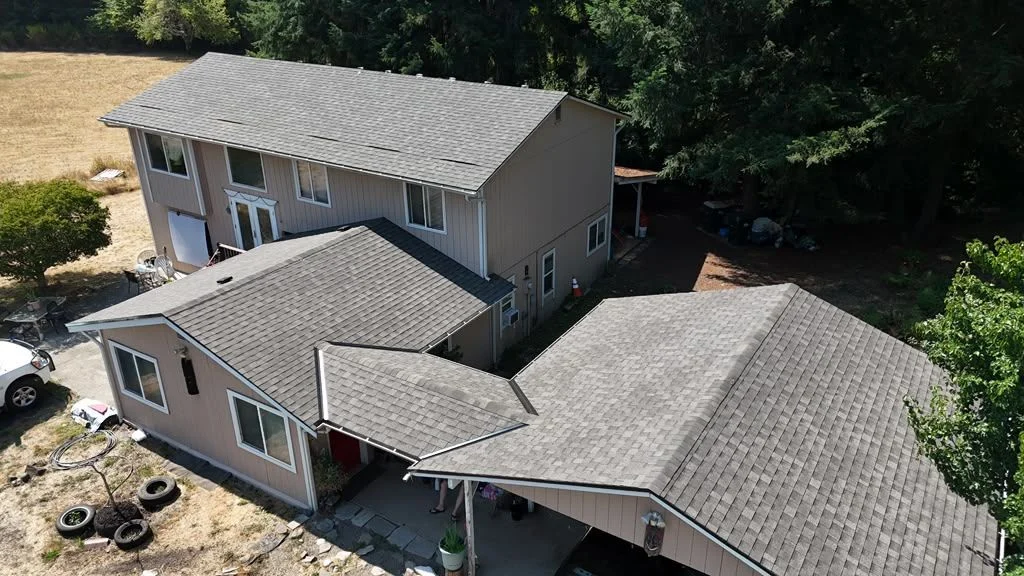
Flat roof vs. pitched roof is one of the first decisions homeowners and business owners face during a roofing project. Flat roofs cost less upfront and work well for commercial buildings, while pitched roofs shed water faster and typically last longer in wet climates. RedBird Roofing installs both systems across the Portland and Vancouver metro and helps property owners match the roof shape to the building, budget, and local conditions.
The quotes for these two systems can look similar on paper, but the 20-year cost picture tells a very different story. Material lifespan, maintenance frequency, and how each design handles heavy Pacific Northwest rainfall all shift the math. Here's what actually separates the two options so you can make the right call for your property.
Cost Differences Between Flat and Pitched Roofs
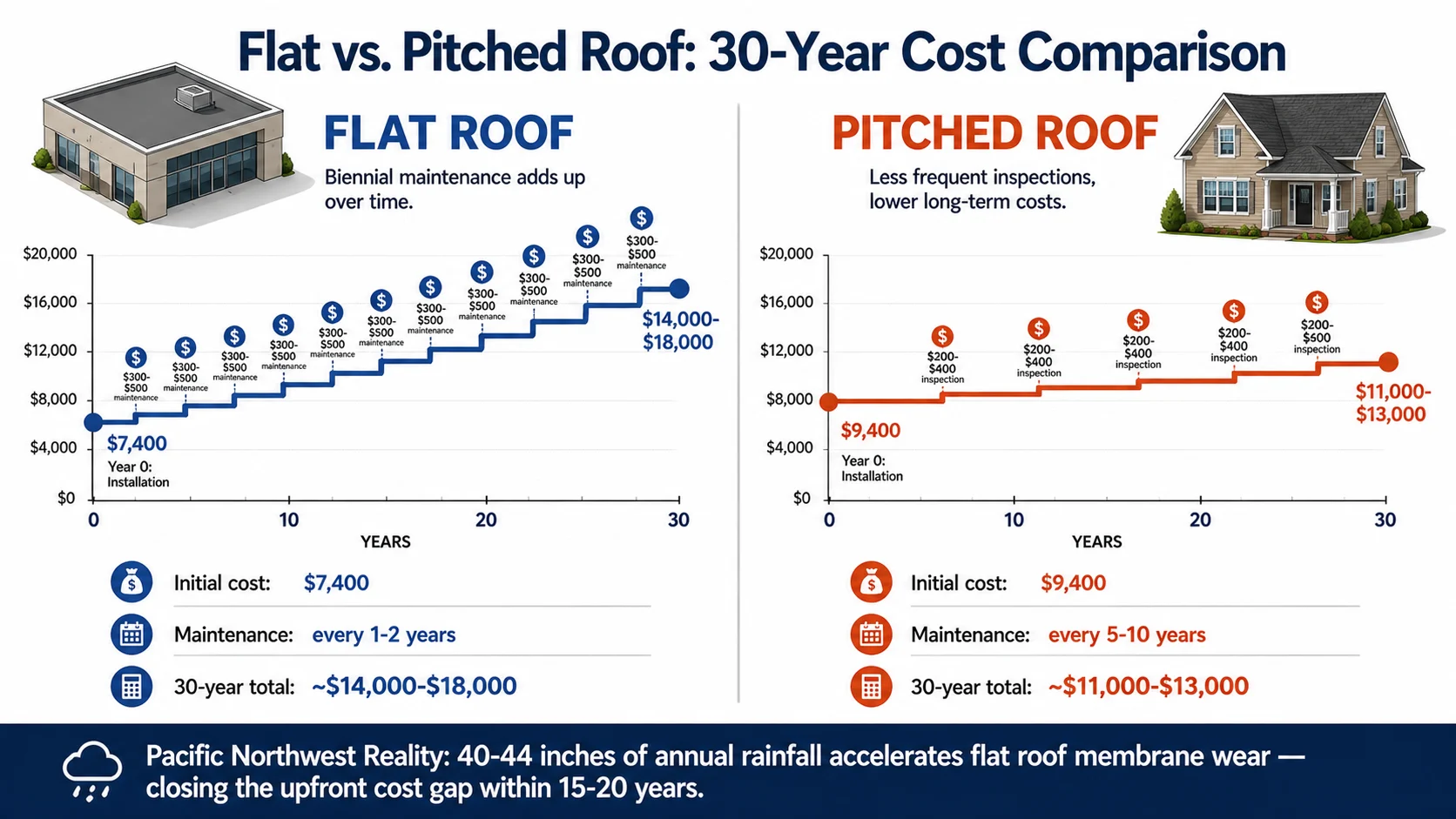
Flat roofs typically cost less to install because they require fewer materials and less labor. According to Angi, flat roof installation averages around $7,400, while pitched roof installation averages around $9,400. However, those upfront savings narrow over time. Portland-Vancouver pricing typically runs slightly higher due to permit complexity and labor rates, with most homeowners paying $9,500 to $15,000 for a residential pitched roof replacement.
Long-Term Maintenance Costs
Flat roofs require inspections and maintenance every one to two years because water pools rather than draining immediately. In Portland and Vancouver, where annual rainfall reaches 40 to 44 inches, standing water accelerates membrane wear. Pitched roofs shed water by design and typically need less frequent attention. Over a 30-year period, the maintenance gap often offsets the lower installation price of a flat system.
Lifespan and Durability in the Pacific Northwest

Pitched roofs with quality asphalt shingles carry manufacturer ratings of 25 to 50 years depending on the material grade, though Portland-Vancouver's persistent moisture and moss growth typically reduce real-world lifespan to 20 to 30 years for standard asphalt products. Premium architectural shingles like Malarkey's lineup hold up longer in PNW conditions due to enhanced moisture resistance and granule retention. Malarkey architectural shingles, which RedBird Roofing installs as a certified Emerald Pro contractor, carry a limited lifetime manufacturer warranty. Flat roof membranes like TPO and EPDM are typically rated for 15 to 25 years before needing replacement.
Clark County's sustained moisture and occasional windstorms put extra stress on flat membranes. Seams and flashing points on flat roofs are the most common failure areas, especially when debris from Douglas firs and big-leaf maples blocks drainage during fall and winter.
Which Roof Type Works Best for Each Building

When a Pitched Roof Is the Better Fit
- Residential homes : Pitched roofs handle Pacific Northwest rain and wind better, shed debris naturally, and offer stronger curb appeal for resale
- Steep lots or hillside properties: Common in Portland's west hills and Camas, where drainage needs favor a pitched design
- Long-term ownership: When you plan to stay 15 or more years, the longer lifespan and lower maintenance offset the higher installation cost
When a Flat Roof Makes More Sense
- Commercial buildings: Flat roofs accommodate HVAC equipment, provide easier maintenance access, and cost less per square foot on large footprints
- Modern residential additions: Some architectural styles and room additions call for a flat section integrated into the overall roof design
- Budget-driven projects: When upfront cost is the primary concern and you commit to regular inspections and roof maintenance
RedBird Roofing is licensed in both Washington and Oregon. We install pitched shingle systems and commercial flat roof membranes including TPO, PVC, and EPDM.
Frequently Asked Questions
Can a flat roof be converted to a pitched roof?
Converting a flat roof to a pitched roof is possible but involves significant structural work, including new framing and load calculations. Most conversions cost substantially more than replacing the existing flat membrane. RedBird Roofing can assess whether your building's structure supports a conversion or whether a high-quality flat roof replacement provides better value.
How often does a flat roof need maintenance in the Portland-Vancouver area?
Flat roofs in the Portland and Vancouver metro should be inspected and maintained at least twice per year, ideally in spring and fall. Heavy leaf and needle debris from local trees clogs drains and holds moisture on the membrane. Clearing debris and checking seams prevents small issues from becoming costly leaks during winter rain.
Do pitched roofs increase home resale value more than flat roofs?
Pitched roofs generally contribute more to residential resale value because buyers associate them with better drainage, longer lifespan, and traditional curb appeal. A new pitched roof with premium shingles is one of the highest-ROI exterior improvements you can opt for. Flat roofs on commercial properties carry no resale penalty when properly maintained and documented.
Build a Roof That Fits Pacific Northwest Weather

The right choice comes down to three questions: How long do you plan to own the building? How much annual maintenance are you willing to schedule? And how does your specific structure (pitched residential, flat-roofed addition, commercial low-slope) interact with 40-plus inches of rain a year? Both flat and pitched roofs work in the Portland and Vancouver metro when matched to the building they sit on and are installed with the right materials for the climate.
RedBird Roofing has been installing both systems across Clark County and the Portland metro for years. We'll tell you straight which one fits your property. Contact RedBird Roofing at (360) 605-3127 or request a free estimate to start with a site visit, not a sales pitch.