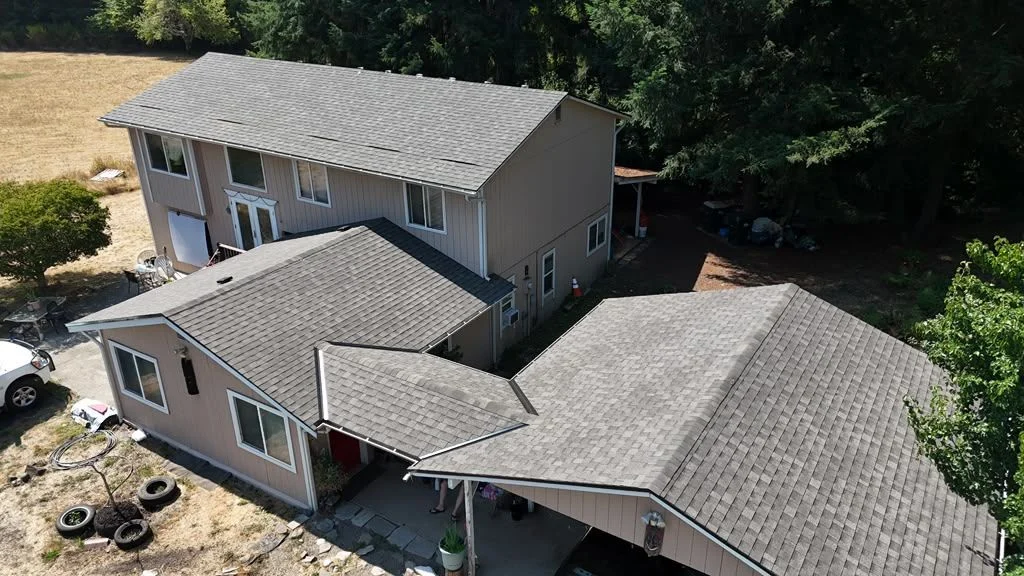
Gutter guards reduce the amount of debris that enters your gutters, but they don't eliminate roofing maintenance entirely. Most quality systems block 80% to 95% of leaves and large debris while still allowing water through. Professional gutter guard installation costs $3 to $25 per linear foot, or $600 to $5,000 for a typical home. RedBird Roofing installs gutter systems and guards across the Portland-Vancouver metro and helps homeowners choose the right level of protection for their property.
Last fall, a homeowner in Ridgefield called us about gutters that overflowed every time it rained, despite cleaning them three times a year. Douglas fir needles and maple leaves filled the troughs within weeks. After installing micro-mesh guards, the same gutters went through the entire wet season without a single overflow. Guards aren't magic, but for homes surrounded by heavy tree cover, they change the maintenance equation. Here's what you need to know before investing.
How Gutter Guards Work and What They Actually Prevent

Gutter guards sit over or inside the gutter channel and act as a filter. They let rainwater pass through while blocking leaves, twigs, pine needles, and shingle granules from accumulating inside the trough. Without guards, debris builds up, blocks the downspouts, and causes water to overflow the gutter edge. That overflow runs down fascia boards, soaks into siding, and pools around your foundation.
In the Portland-Vancouver metro, where sustained fall and winter rain pushes heavy debris into every gutter system, guards reduce how often gutters need to be cleaned from three or four times per year to once or twice. They don't replace maintenance entirely because fine particles like roof granules and pollen still accumulate on top of the guard's surface and need occasional rinsing.
Types of Gutter Guards and What They Cost

Gutter guards range from $3 to $25 per linear foot installed. The price gap usually reflects how well each type handles the specific debris your trees produce.
Mesh and Micro-Mesh Screens
Mesh guards use a fine screen that blocks even small debris like pine needles while letting water filter through. Micro-mesh versions use surgical-grade stainless steel screens that handle the heaviest debris. These cost $8 to $20 per linear foot installed and are the most effective option for heavily wooded properties in Felida, Woodland, and Camas where needle debris dominates.
Reverse Curve and Screen Guards
Reverse curve guards use surface tension to direct water into the gutter while debris slides off the edge. They cost $12 to $25 per linear foot and work well for large leaf debris but can struggle with fine needles. Basic screen guards are the most affordable at $3 to $8 per linear foot but offer the least filtration and need more frequent cleaning.
Pros, Cons, and When Guards Are Worth the Investment

Advantages
- Fewer cleanings per year: Guards cut cleaning frequency by 50% to 75% depending on tree coverage.
- Reduced overflow damage: Properly functioning guards prevent the fascia rot, siding stains, and foundation pooling caused by overflowing gutters.
- Pest prevention: Enclosed gutter channels keep birds, rodents, and insects from nesting inside.
Limitations
- Not maintenance-free: Fine debris still collects on top of guards and needs periodic rinsing.
- Upfront cost: Professional installation for a 200-linear-foot home runs $600 to $5,000, depending on guard type.
- Installation quality matters: Poorly installed guards can void roof warranties or damage shingles. Professional installation ensures compatibility with your roofing system.
For homes in heavily wooded neighborhoods across Clark County and the Portland metro, gutter guards typically pay for themselves within three to five years through reduced cleaning costs and the prevention of water damage repairs. Homes with minimal tree cover may not see enough return to justify the investment.
Frequently Asked Questions
Do gutter guards work with seamless gutters?
Yes, most gutter guard systems are designed to fit standard seamless aluminum gutters, which are the most common type in residential construction. RedBird Roofing fabricates custom seamless gutters on-site and can pair guard installation with new gutter installation during the same appointment. Matching the guard type to your gutter profile ensures a proper fit and full coverage.
How often do you still need to clean gutters with guards installed?
Plan on inspecting and rinsing the guard surface once or twice per year, typically in late fall after leaves drop and again in spring. Fine debris like pollen, roof granules, and small seeds can accumulate on the screen's surface and slow water flow. A rinse with a garden hose from the ground or a ladder handles most buildup.
Can gutter guards handle heavy Pacific Northwest rain?
Quality micro-mesh and reverse curve guards are rated to handle rainfall rates well above what the Portland-Vancouver area experiences. Heavy downpours here reach about two inches per hour at peak intensity. Most professional-grade guards handle four to six inches per hour without overflow, which provides a comfortable margin even during the heaviest storms.
Find the Right Gutter Protection for Your Home

Gutter guards work, but the right type depends on your tree coverage, budget, and willingness to maintain them. Micro-mesh guards offer the best debris filtration for Pacific Northwest homes surrounded by conifers. Basic screens cost less but require more attention. Either way, properly functioning gutters protect your fascia, siding, and foundation from the region's relentless rain.
Contact RedBird Roofing at (360) 605-3127 or request a free estimate to discuss gutter guard options for your home. Ask about saving 50% on new gutters with a full roof replacement.