What Is Roofing Underlayment? A PNW Homeowners Guide to Types, Benefits, and Why It Matters
Roofing underlayment is a water-resistant or waterproof barrier installed on roof decking, beneath shingles. It protects your home from wind-driven rain, ice damming, and moisture infiltration. RedBird Roofing installs the correct underlayment system on every roof across the Vancouver, WA and Portland, OR metros, where sustained annual rainfall and minimum-spec installs don't hold up long-term.
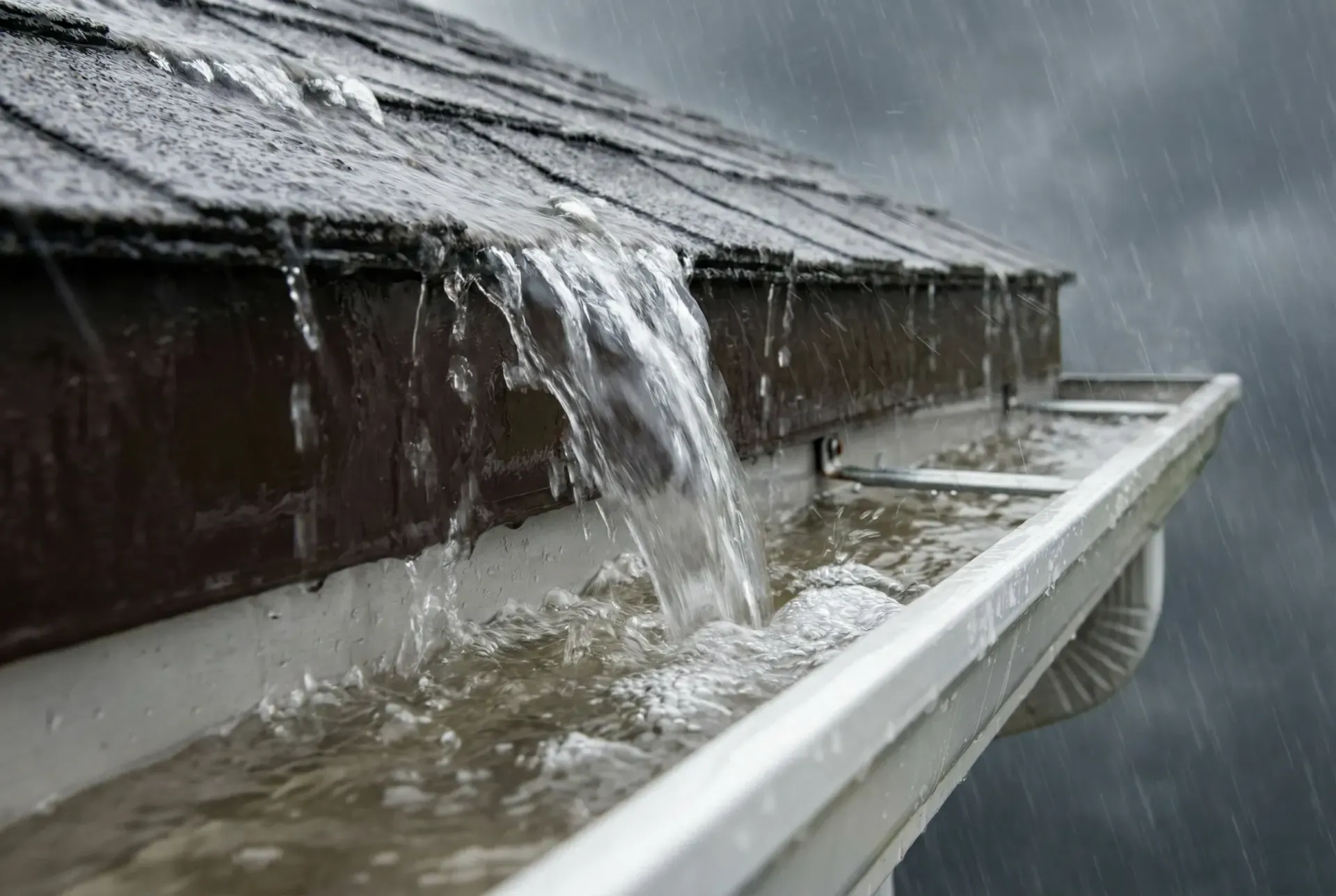
Most roof leaks that appear two or three years after a new installation trace back to underlayment, not the shingles. The shingles get all the attention during a roofing project, but it's the membrane beneath them that determines whether wind-driven rain and sustained PNW drizzle actually stay outside.
This guide covers the three main types of underlayment, what each one is designed to handle, and where most roofing bids cut corners you can't see once the job is done.
What Roofing Underlayment Actually Does
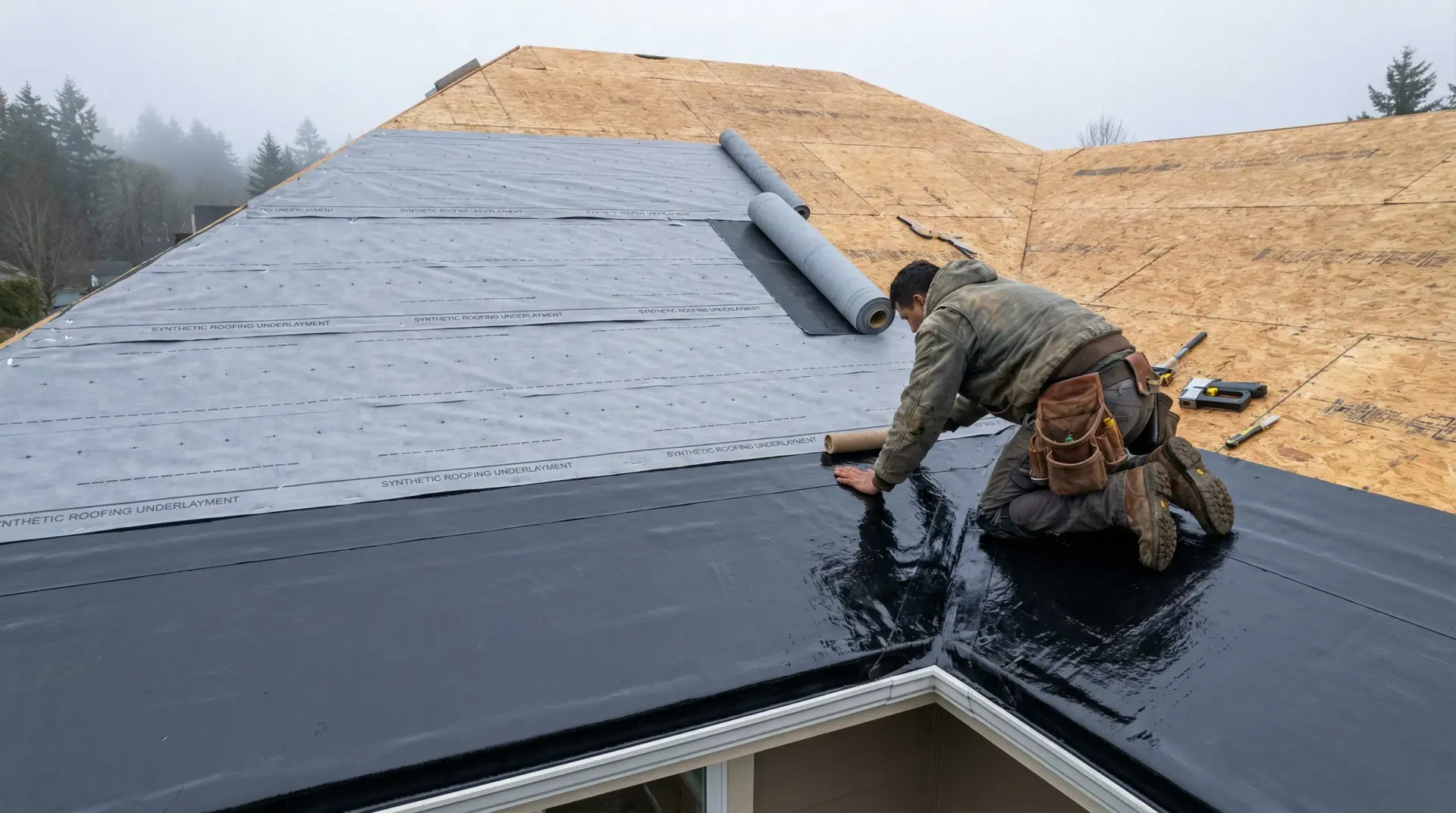
Shingles shed water, but they're not a sealed surface. Wind lifts their edges. Nails create penetration points. Heavy PNW rain drives moisture sideways under lapped shingle edges on low-slope sections. Underlayment is the layer that catches what gets past the shingles before it reaches the wood decking.
It also protects the exposed deck during installation. A roofing crew working through a November drizzle near Battle Ground can't always wait for a dry window, and underlayment keeps the deck protected while the job progresses. If a major windstorm strips shingles before repairs can happen, it's the layer standing between the storm and your attic.
The Three Types of Underlayment (and When Each One Makes Sense)
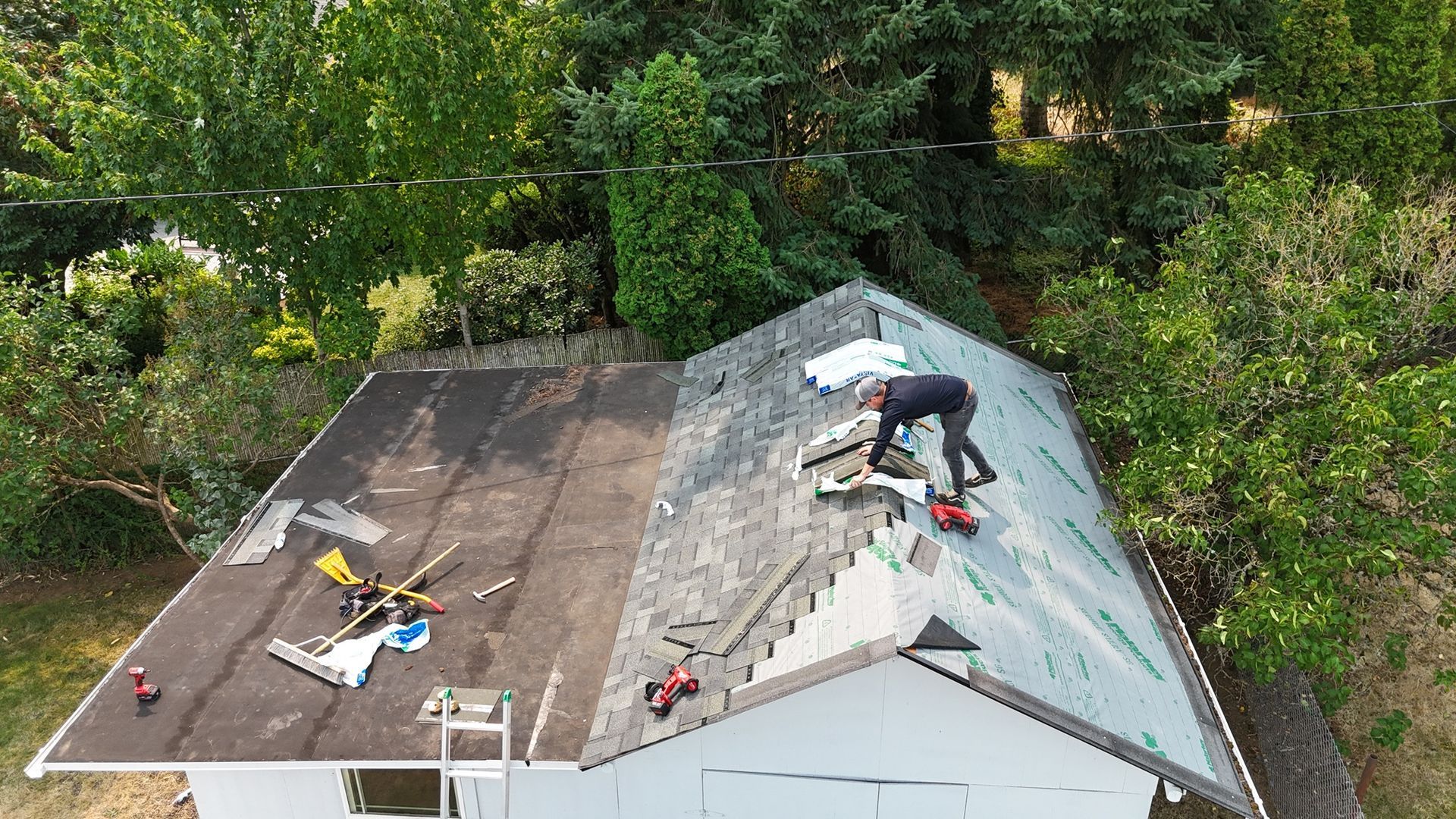
Not all underlayment performs equally, and those differences matter on a roof that sees months of sustained rain each year.
Felt Underlayment (Asphalt-Saturated)
Traditional felt (tar paper) comes in 15-lb and 30-lb weights. It's still used in low-exposure applications, but it absorbs moisture, wrinkles when wet, and degrades faster in humid climates. Most roofing manufacturers no longer recommend felt as the primary underlayment for steep-slope residential roofing in regions with high rainfall.
Synthetic Underlayment
Synthetic underlayment is a woven polypropylene sheet: lighter, stronger, and far more tear-resistant than felt. It doesn't absorb water and holds up better during extended deck exposure between installation stages. Malarkey, whose shingle systems RedBird installs on full roof replacements, specifies synthetic underlayment to maintain manufacturer warranty compliance. It's the baseline for performance roofing in the Pacific Northwest.
Ice and Water Shield
Ice and water shield is a fully adhered, self-sealing membrane that bonds directly to the deck. The best practice in Washington and Oregon calls for ice and water shield on the first 24 inches above the eave, the zone most exposed to wind-driven rain. Code also requires it in valleys and around penetrations like chimneys, skylights, and pipe boots.
Many contractors install it only where code requires. The difference between minimum-code and thorough coverage shows up two winters later when valleys stay dry.
Why the PNW's Climate Makes Underlayment Selection Matter
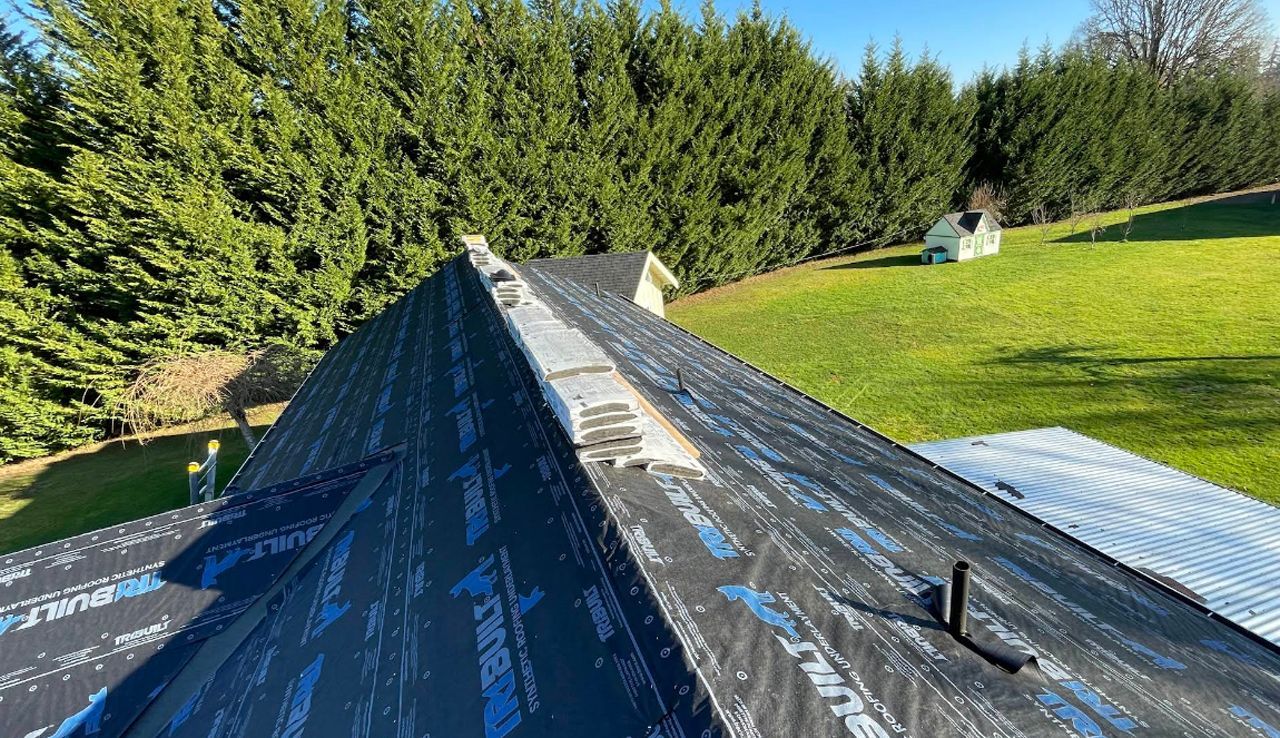
The Portland and Vancouver metro gets wet and stays wet for weeks at a time. Sustained drizzle and cool temperatures let moisture work into any unsealed gap. That's a different challenge than a climate where heavy rain drains and dries in a day.
On pitches below 4:12, which is common on ranch-style homes throughout Orchards and Felida, water moves slowly and has more time to find a seam. When RedBird Roofing scopes a new roof for Vancouver and Portland homeowners, the type of underlayment and its coverage are part of the conversation from the start.
What Happens When Underlayment Is Skipped or Wrong
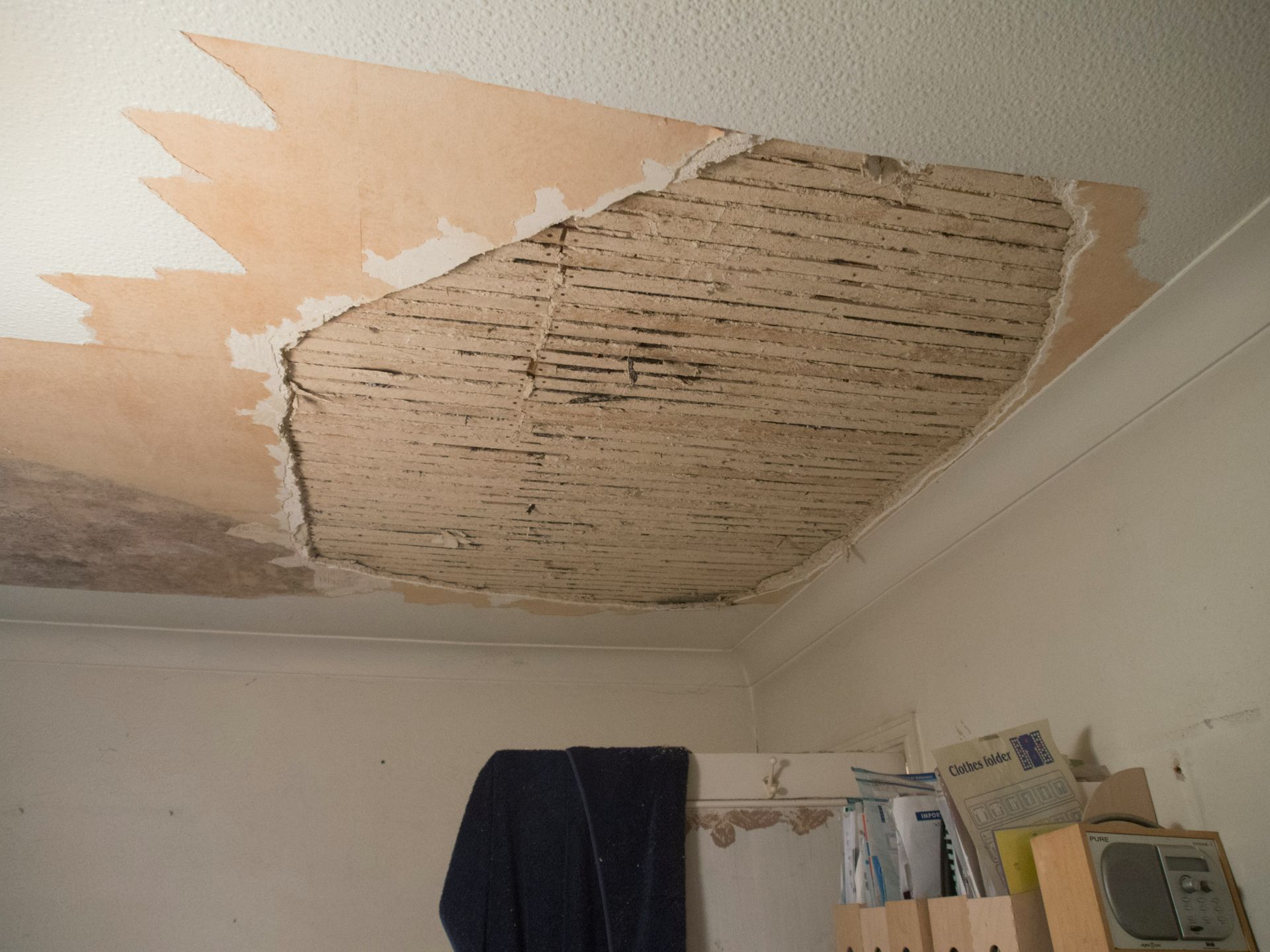
Incorrect underlayment rarely reveals itself immediately. Shingles look fine through the first summer. By the second or third wet season, moisture that crept past a bad seam or unshielded valley has soaked into the decking. The repair now involves replacing wood, not just membrane.
The most common pattern is felt underlayment on a low-slope section with no ice and water shield at the eaves, paired with an unsealed valley. Together, they create a leak that keeps returning no matter how many roof repair calls get made. Correct underlayment is what lets shingles perform at their rated lifespan—and it protects the 25-year RedBird labor warranty that backs our work.
Frequently Asked Questions
Does underlayment type affect my roofing warranty?
Yes, in many cases it does. Malarkey's Emerald Pro certification, held by RedBird Roofing, requires synthetic underlayment as part of a compliant system installation. Using non-specified materials can void the shingle manufacturer warranty even when shingles are installed correctly. Always confirm underlayment specs with your contractor before signing off on a quote.
How long does roofing underlayment last compared to shingles?
Quality synthetic underlayment typically lasts as long as the shingles above it and often carries manufacturer ratings of 25 to 40 years. Felt underlayment degrades faster in wet climates and may need attention before the shingles reach their end of life. Any full roof replacement should include new underlayment regardless of how the existing material looks.
Can I add underlayment to my existing roof without replacing shingles?
Adding underlayment beneath existing shingles isn't practical. The shingles would need to be removed first. If you suspect your current roof has inadequate underlayment, a professional roof inspection can assess whether the problem is localized or whether a full replacement is the right path forward.
Get the Foundation Right Before the First Shingle Goes Down
Underlayment is made and buried before most homeowners ever see the finished roof. Synthetic underlayment with ice and water shield at the eaves, valleys, and penetrations is the combination that holds in Vancouver and Portland's climate, and the one that supports the long-term warranty on your investment.
If you're planning a roof replacement or want to know what's under your current shingles, request a free estimate from RedBird Roofing. Licensed in Washington and Oregon, with 24/7 live answering and a 25-year labor warranty, RedBird serves homeowners across the Vancouver and Portland metros.
Contact Us Today!
We will get back to you as soon as possible.
Please try again later.