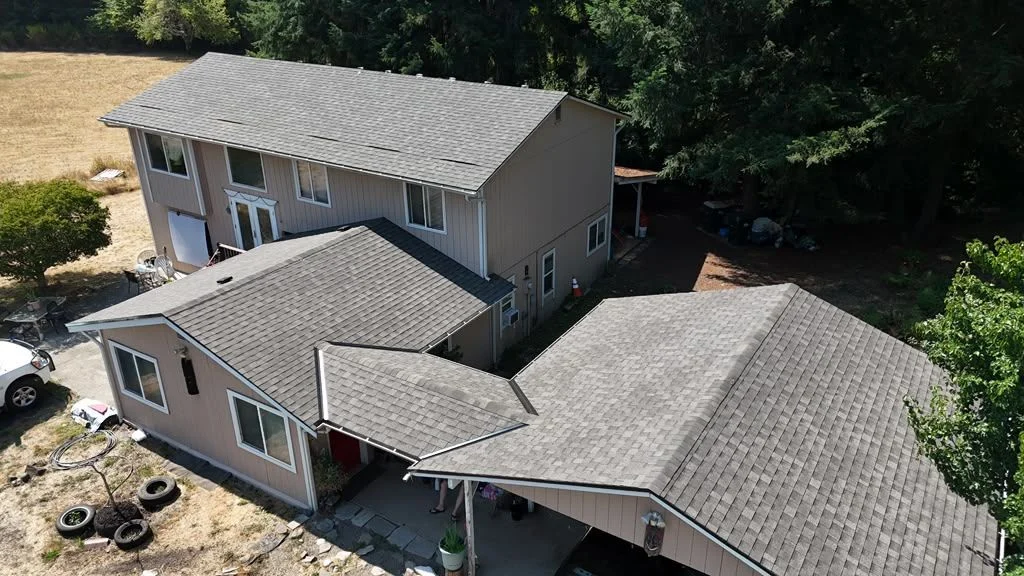
A drip edge is a strip of metal flashing installed along the eaves and rakes of a roof that directs water into the gutter and away from the fascia board. Without it, rainwater runs behind the gutter and soaks into the wood underneath, leading to rot, mold, and pest entry. RedBird Roofing installs drip edge on every roofing project across the Portland and Vancouver metro because both Oregon and Washington building codes require it.
Clark County and the Portland metro average 40 to 44 inches of rain per year, most of it falling between October and April in sustained, wind-driven storms. That volume of water hitting a roof edge without a drip edge doesn't just drip. It sheets down the fascia, saturates the soffit, and works its way into the roof deck. Here's what this component does, why it matters more in this climate, and what to look for on your own roof.
How a Drip Edge Protects Your Roof and Fascia

A drip edge sits at the very edge of the roof deck, extending past the fascia board by about a half inch. Its angled profile kicks water outward and into the gutter instead of letting it curl back under the shingles or run down the fascia. This prevents three problems that are common in Pacific Northwest homes.
- Fascia rot: Without a drip edge, water wicks behind the gutter and saturates the fascia board. In Portland and Vancouver's wet climate, untreated fascia can start rotting within two to three years.
- Pest entry: The gap between the roof deck and fascia is a common entry point for wasps, carpenter ants, and rodents. A drip edge seals that gap.
- Shingle sag: The first row of shingles needs a straight, supported edge to hang over properly. A drip edge provides that base and prevents the edge from drooping over time.
Building Code Requirements in Oregon and Washington

Oregon and Washington have adopted the International Residential Code, which requires drip edge at eaves and rakes on all asphalt shingle roofs. The relevant section is IRC R905.2.8.5. This means every new roof installation and full replacement must include drip edge to pass inspection.
Older homes built before the code requirement may not have drip edge installed. During a roof replacement, adding drip edge brings the roof into compliance and protects the manufacturer's shingle warranty. Skipping it on a reroof can void warranty coverage and create issues during a home sale inspection. RedBird Roofing includes proper drip edge installation on every residential and commercial project as standard practice.
Drip Edge Materials and Installation

To ensure your drip edge provides long-lasting, watertight protection, you need to consider both the material type and the precise installation order.
Material Options
Aluminum is the most common drip edge material for residential roofs. It's rust-proof, lightweight, and available in colors that match your shingles and trim. Galvanized steel is thicker and more dent-resistant, which makes it a good fit for homes near heavy tree cover in areas like Felida, Orchards, and Woodland. Drip edge material typically costs $2 to $4 per linear foot when included with a full roof replacement.
Why Installation Sequence Matters
At the eaves, the drip edge goes directly onto the roof deck first, then the ice and water shield lays over it, followed by underlayment. At the rakes, the sequence reverses: underlayment first, with the drip edge on top. Getting this order wrong lets water bypass the drip edge entirely and run straight into the fascia. This is one of the reasons drip edge installation should be handled by a licensed roofing contractor.
Frequently Asked Questions
How much does drip edge cost to install?
Drip edge material runs $2 to $4 per linear foot. When included in a full roof replacement, the added cost for a typical home is a few hundred dollars. Retrofitting drip edge onto an existing roof costs more because the roofer must lift the shingles to slide the flashing underneath. RedBird Roofing includes a drip edge as a standard component on every reroof.
Can I add a drip edge without replacing my whole roof?
Yes, a drip edge can be retrofitted by lifting the first course of shingles and sliding the flashing underneath. However, this requires careful work to avoid cracking aged shingles. A professional assessment determines whether retrofit is feasible or whether the shingles are too brittle to lift safely without causing additional damage.
How do I know if my roof already has drip edge installed?
Stand at ground level and look at the roof edge where the shingles meet the gutter. You should see a thin metal strip extending past the fascia, guiding water into the gutter channel. If the shingles just hang over the edge with no visible metal strip beneath them, your roof likely lacks a drip edge. A free roof inspection will confirm whether yours is properly installed.
Protect Your Roof From the Edge Up

A drip edge costs very little relative to the damage it prevents. In a region that gets 40-plus inches of rain annually, this small piece of metal stands between your fascia boards and years of moisture damage. Oregon and Washington codes require it for good reason, and any quality reroof should include it.
Contact RedBird Roofing at (360) 605-3127 or schedule a free estimate to check whether your current roof has proper drip edge protection.